
Comparing Treatments
Oral Appliance Therapy vs. CPAP
Neither treatment is universally 'better' — the right one is the one you'll use every night.
CPAP (continuous positive airway pressure) has long been the standard first-line treatment for sleep apnea, and it works well for many patients. But CPAP only helps if it's used consistently — and a meaningful number of patients find the mask, the hose, and the noise hard to live with long-term. That's where custom oral appliance therapy comes in: a smaller, quieter option that's easier for many patients to use every single night.
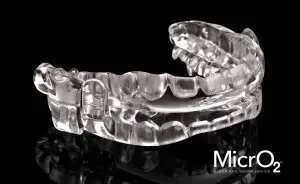
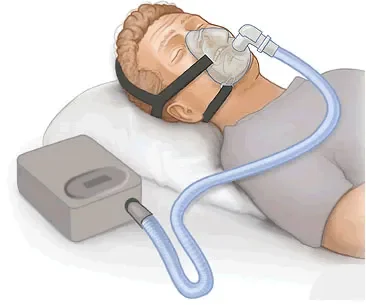
| Oral Appliance Therapy | CPAP | |
|---|---|---|
| What it is | A small, custom-fitted dental device worn in the mouth during sleep. | A machine that delivers pressurized air through a mask worn over the nose and/or mouth. |
| Comfort & noise | Compact and silent — no mask, no hose, no motor. | Effective, but the mask and airflow take adjustment; some find it hard to get comfortable. |
| Portability | Fits in a small case — easy to travel with, no power outlet needed. | Requires the machine, tubing, and a power source wherever you sleep. |
| Maintenance | Rinse and brush daily; periodic check-ins to confirm fit. | Regular mask, filter, and tubing replacement; more parts to clean. |
| Best suited for | Mild to moderate obstructive sleep apnea, or patients who struggle to use CPAP consistently. | Often the first-line recommendation for moderate to severe sleep apnea. |
Not sure which is right for you? That's exactly what your free consultation is for. See the full range of treatment options or learn how diagnosis works.
Oral Appliance vs. CPAP — Frequently Asked Questions
For mild to moderate obstructive sleep apnea, oral appliance therapy is a well-established, effective option. For more severe cases, CPAP is often the first recommendation — but the appliance may still play a role for travel or as a backup. Your specific situation determines what we recommend.
Yes — this is one of the most common reasons patients come to us. If you've struggled to use CPAP consistently, we'll review your diagnosis and discuss whether an oral appliance is an appropriate next step.
Most patients adjust within the first couple of weeks. We schedule follow-up visits to fine-tune the fit until it feels comfortable for regular, nightly use.